
|
|
Britain under the Roman Empire |
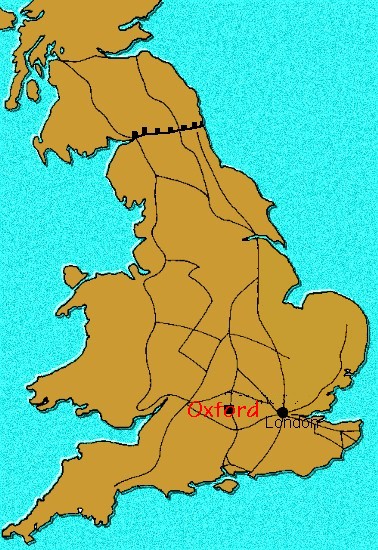
The Britain which attracted Julius Caesar's interest in the 1st century BC had been populated by a series of European migrations beginning in the Stone Age. Upland parts of the island were not easily penetrable; the most desirable areas for settlement comprised the open country of south and east. Rivers and tracks along higher ground provided communication.
In AD 43 the Romans, initially invited by Verica, one of the British kings, found an island split up among warring tribes who lived in flimsy huts in sordid conditions although they could find resources to build extensive defences and engage in foreign trade. Some parts of the island - most of central-southern Britain including much of Oxfordshire - welcomed the Romans but other areas opposed them and were ruthlessly conquered. Ultimately virtually the whole of Britain was happy to be incorporated into an Empire which brought great economic benefits: instead of tribal conflict, membership of a vast empire, including participation in the complexities of Imperial administration, a system of taxation, developments in communications, long-distance trade and commerce and the foundation of towns and appearance of villas.
© 1998 Oxfordshire Museum Service,
Setúbal Museums and the Benaki Museum
